Insight
After 30 years of luxury shopping sprees, Chinese travelers are choosing Arctic therapy over Louis Vuitton. A recent firsthand account reveals what's really happening.
Why it matters
Chinese outbound tourists were the world's biggest luxury spenders for decades—30-40% of global luxury purchases. Their sudden pivot from Parisian shopping to Swedish wilderness isn't just a travel trend. It signals something deeper about how China's wealthy see status now.
What someone just observed
A Chinese traveler recently posted about their experience in Luleå, Sweden—a city so remote most Europeans haven't heard of it.
The scene: pulling themselves out of a frozen lake at midnight. Heart pounding. Body shaking. Then standing in the snow watching green auroras roll across the Arctic sky.
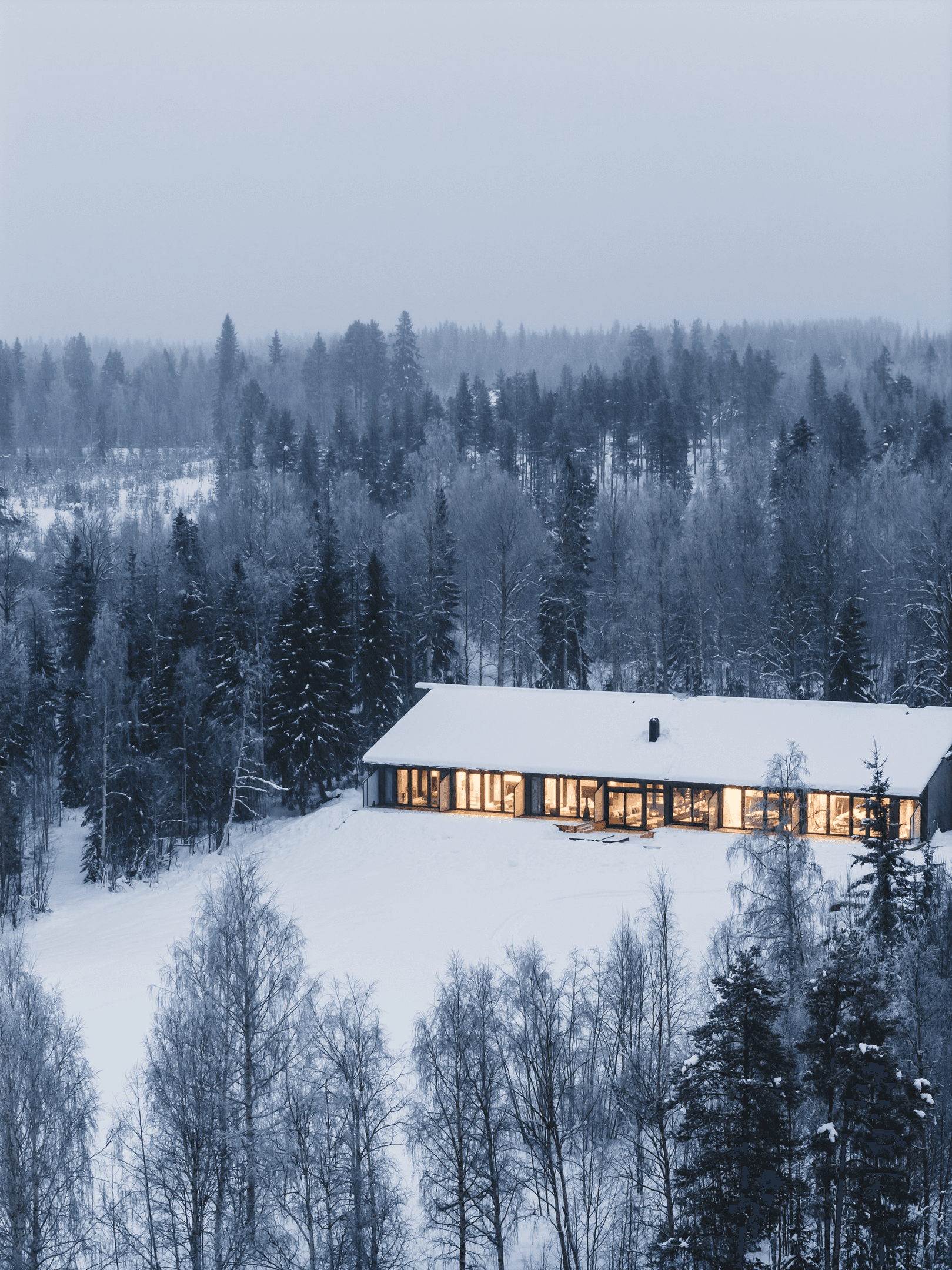
Three years ago, they'd visited the same region with almost no other Chinese tourists. They stayed at the Treehotel—suspended in trees—and soaked in Arctic Bath, a floating sauna on an ice river.
Last month when they returned to Villa Äng (a private five-room villa deep in the forest), the Stockholm-to-Luleå flight was packed with Chinese tourists carrying professional cameras.
The shift on the ground
They chatted with their seatmate about why she'd chosen this remote spot.
She laughed. "Where would you even find a group tour this niche?"
She'd joined her EMBA cohort—elite executive networks in China where wealthy entrepreneurs form tight bonds. When one suggested Sweden, the whole group jumped in.
They skipped Sweden's usual routes—Stockholm, maybe Kiruna—for something different: forest isolation, ice bathing, total disconnection.
Their itinerary? Zero shopping malls. Just:
• Arctic Bath's thermal rituals
• Treehotel's mirrored cube
• Complete digital detox
Three years ago, Chinese tourists in Europe meant luxury shopping. Hermès allocation lines. Louis Vuitton flagship stores. Duty-free at Paris's Galeries Lafayette.
Now? Those Chinese shopping queues have disappeared. The luxury counters that used to require crowd control sit nearly empty.
By the numbers
Hurun Research (China's leading wealth tracker) surveyed 470 wealthy Chinese in 2026. Average household assets: 61 million RMB (~$8.5 million USD).
Their spending plans:
Increasing:
• Travel: #1 category (58% intend to increase spending)
Decreasing:
• Luxury goods: #1 category
• Watch purchases: down 123,000 RMB ($17K)
• Collectibles: down 86,000 RMB
• Jewelry: down 55,000 RMB
Another study by travel firm Longtu Interactive: over 70% of Chinese travelers aged 18-24 now choose independent travel over group tours.
The era of "上车睡觉, 下车拍照" (sleep on bus, photo at landmark) is over.
What's really happening
International observers often misread this as economic constraint. "Chinese economy is slowing, so they're spending less."
The data shows otherwise.
Chinese consumers have more discretionary capital now, not less. Here's why:
China's real estate market has been in a slump for years. On a macro level, economic slowdown. On a micro level, billions in capital freed up from property speculation.
That money didn't disappear. It migrated—from real estate to experiential spending.
At the same time, China reached material saturation. After 30 years of rapid wealth accumulation, Chinese consumers own enough luxury goods, enough branded items, enough stuff.
The next frontier isn't more things. It's meaning, community, and real experiences.
The psychology shift
Five years of COVID lockdowns forced something deeper: a psychological reckoning.
When Chinese consumers were locked down for months, they sat with themselves. When they emerged, the old status symbols—Hermès bags, Parisian shopping sprees, group tour itineraries—stopped delivering the validation they once did.
The traveler noticed this shift: Three years ago, Chinese guests at these Swedish hotels took photos constantly—content for WeChat Moments (China's primary social sharing platform). Now? Phones stayed in pockets. The experience became the point, not the proof.
During their stay at Villa Äng, they met Jenny, the villa's founder. Her family also created the Treehotel and Arctic Bath.
"Before COVID, we had many Chinese guests who loved the isolation," she told them. "Now they're coming back, but they engage differently. They're not here to check a box. They're here to genuinely disconnect."
What Sweden offers
Swedish culture has concepts that resonate with this shift:
Lagom: "Just right"—not too much, not too little. A philosophy of restraint that challenges conspicuous consumption.
Friluftsliv: "Open-air living"—the belief that time in nature is necessary for wellbeing.
Allemansrätten: The legal "right to roam"—anyone can walk through forests, even on private land. No barriers. No prescribed paths.
For Chinese travelers used to prescribed tourism (group tours with fixed itineraries, scenic areas with designated photo spots), this freedom is radical.
Villa Äng doesn't have a packed schedule. Arctic Bath doesn't force treatments. Visitors choose their own discomfort. They write their own experience.
My take: This is a "coming-of-age" story
Here's what the business world is missing:
Chinese consumers aren't spending less. They're spending with intent.
For 30 years, Chinese consumers were told what to buy:
• Government policy said: "Invest in real estate"
• Luxury brands said: "Earn the right to buy from us"
• Tour operators said: "Follow this itinerary"
Five years of lockdowns forced a reckoning. When they emerged, that paternalistic consumption model broke.
This isn't rebellion. It's maturation.
What's dying:
• Gatekeeping brands (Hermès allocation: "earn the right")
• Prescribed tourism (group tours: "follow this path")
• Scale-driven luxury (500-room hotels: "we're everywhere")
What's winning:
• Singular experiences (Villa Äng: 5 rooms, that's it)
• Autonomy-enabling brands (Arctic Bath: "your body, your choice")
• Unreplicable authenticity (Treehotel: can't experience this elsewhere)
Kent, the Treehotel founder, has a saying: "Dig where you stand." His family never left their forest. They built world-famous properties in their backyard.
That philosophy—depth over scale, singularity over replication—resonates with the new Chinese traveler.
The bottom line
This isn't a wellness trend. It's not temporary.
Chinese consumers just graduated from 30 years of being told what to buy. Now they're deciding for themselves.
The brands that win won't be the ones with the best supply chains or the most heritage. They'll be the ones who can answer:
"What's the one singular thing only you can offer?"
Generic luxury is dead. Chinese consumers want authorship, not authority.
What to watch
• Will luxury brands pivot from gatekeeping to enabling?
• Can European tourism adapt to FIT (free independent travelers) over group tours?
• Which destinations will follow Sweden's model of singular experiences?
Final thought
After watching Chinese consumer behavior evolve for years, this shift—from material accumulation to experiential seeking—isn't just about travel preferences.
It's about a generation redefining what status means after watching their parents chase material security for 30 years. They saw that security evaporate (real estate crash, economic uncertainty). Now the question is: "If wealth doesn't guarantee stability, what's worth spending on?"
The answer: experiences that make you feel alive, connections that feel real, and the autonomy to choose your own definition of value.
That's why a frozen lake in Sweden beats a Louis Vuitton boutique in Paris.
Not because one is better. Because one lets you decide what matters.
Ready to win Chinese customers?
Brands Without Borders helps businesses abroad reach Chinese travelers and consumers on Xiaohongshu and WeChat, from hotels and destinations to restaurants, retail and luxury brands. We handle account setup and verification, creative, media buying and the WeCom handoff that turns a post into a booking or a sale.